Modern home aesthetics usa: A critical architectural analysis of domestic design, regional geography, and material culture
Residential design across North America reflects diverse regional histories, climatic demands, and cultural influences. Domestic environments shape human behavior, psychological health, and social interactions daily. Modern home aesthetics usa. Property owners frequently attempt interior overhauls without studying underlying structural contexts.
Navigating contemporary architectural trends demands moving past superficial digital inspirations. Living spaces operate as complex ecosystems requiring deliberate balances of natural illumination, thermal mass, and ergonomic flow. Ignoring these foundational elements produces disjointed interiors that lack long-term resilience.
Achieving enduring aesthetic coherence requires rigorous methodologies rooted in architectural history, spatial proportion, and material honesty. This reference guide provides an exhaustive examination of the domestic design sector. Readers will find comprehensive analytical frameworks designed to evaluate modern home aesthetics usa projects with professional clarity.
Understanding modern home aesthetics usa
The phrase modern home aesthetics usa is frequently misinterpreted as a singular visual formula or a rigid national trend. Many consumers assume that elite interior design follows uniform guidelines dictated by coastal taste-makers. Architectural historians and professional decorators view the domestic landscape through a pluralistic lens. Regional climate variations, historical preservation mandates, and diverse cultural heritages ensure that residential design remains highly localized.
A primary source of confusion stems from rapid digital exposure via online inspiration platforms. Algorithms homogenize visual culture by presenting identical furniture arrangements and color palettes to audiences across vastly different structural typologies. Applying a coastal California palette to a historic Chicago brownstone creates jarring functional friction and visual dissonance. True design excellence requires harmonizing global inspirations with local structural realities.
Oversimplifying curation processes invites financial waste and spatial dysfunction. Selecting furnishings based solely on photographic appeal often compromises ergonomic comfort and durability. Recognizing that domestic environments must perform under rigorous daily use transforms how clients evaluate professional interior projects, shifting focus from ephemeral imagery to enduring structural harmony.
Deep Contextual Background
Domestic interior aesthetics evolved through distinct industrial and cultural phases over the past century. Early twentieth-century residential architecture relied on formal compartmentalization, separating service zones from formal entertaining spaces with heavy doors. The post-war economic boom shattered these traditional boundaries, introducing open-plan living arrangements that prioritized fluid sightlines and family-centric gathering areas.
The late twentieth century witnessed suburban expansion and mass-market furniture manufacturing, democratizing interior decoration while occasionally diluting artisanal craftsmanship. Simultaneously, global supply chains expanded access to exotic textiles, reclaimed woods, and international manufacturing techniques. Designers began mixing historical revival styles with minimalist geometry, laying the groundwork for contemporary curation.
Recent technological integrations transformed living spaces into connected digital hubs. Smart lighting systems, automated window treatments, and integrated acoustic controls altered how rooms function after dark. Understanding this evolutionary trajectory explains why contemporary residential design demands sophisticated multidisciplinary expertise rather than simple surface decoration.
Conceptual Frameworks and Mental Models
The Spatial Hierarchy Model
This mental model establishes visual and functional focal points within any room. Designers organize furniture scales and lighting intensities around primary architectural features, preventing visual clutter and establishing clear pathways of movement.
The Tactile Layering Framework
Surface richness depends on contrasting textures rather than uniform color schemes. This model balances hard elements like stone and metal with soft textiles such as linen, wool, and leather to stimulate sensory engagement without overwhelming the eye.
The Chromatic Balance Theorem
Color distribution follows strict volumetric proportions rather than random selection. Dominant neutral backgrounds anchor large surfaces, secondary tones define upholstery, and accent hues provide targeted visual punctuation across small decorative elements.
Key Categories and Stylistic Variations
Executing a sophisticated residential overhaul requires evaluating distinct design vocabularies. Each stylistic category presents unique material, spatial, and functional trade-offs.
New Traditionalism
This approach blends classical architectural moldings, antique case goods, and tailored upholstery with modern color saturation. It offers timeless elegance and rich historical depth alongside high initial acquisition costs for quality antiques and custom millwork.
Organic Minimalism
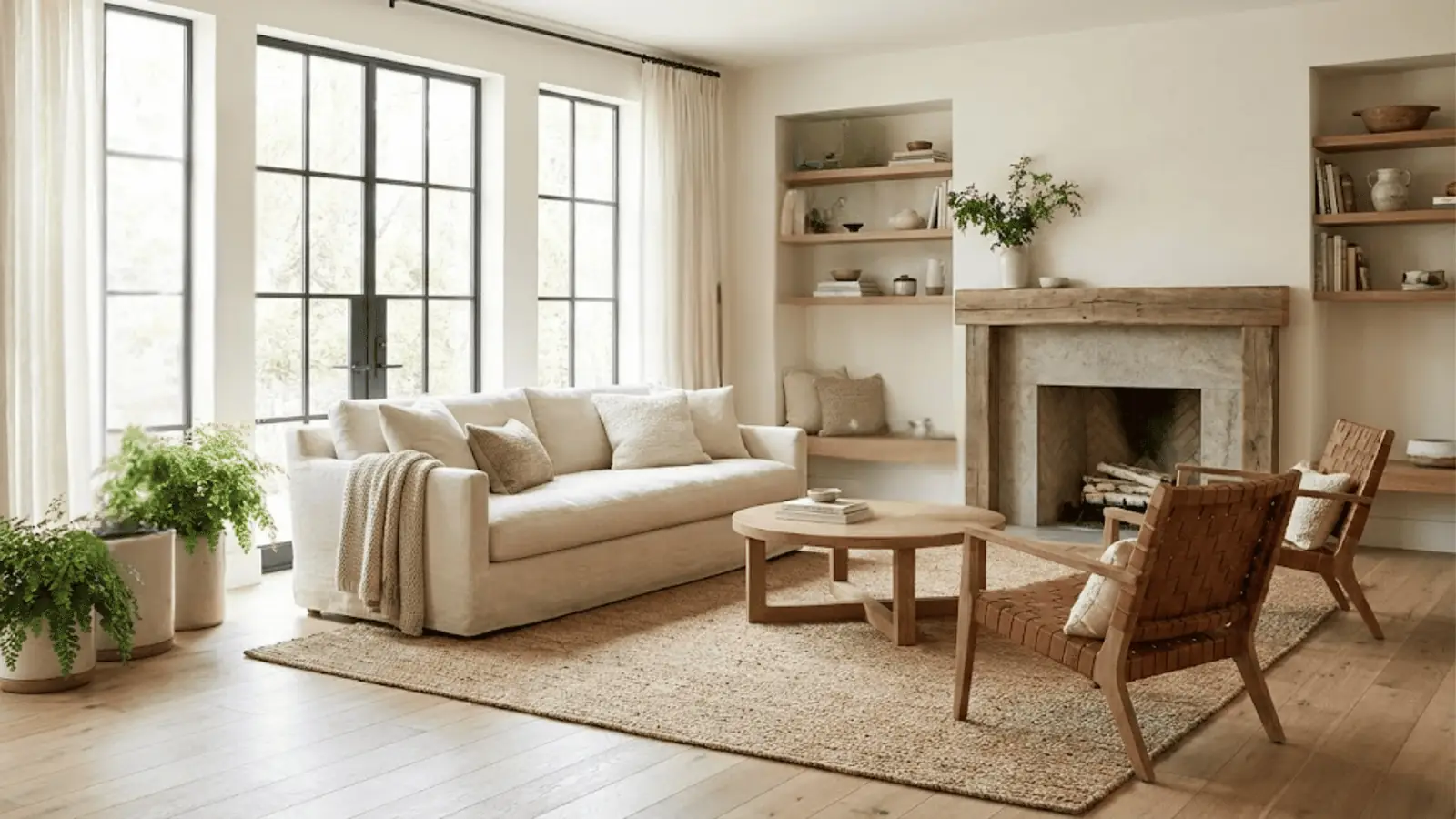
Natural materials, earthy plaster finishes, low-profile seating, and uncluttered floor plans anchor this philosophy. It creates serene environments promoting mental relaxation, demanding rigorous discipline regarding storage management.
Industrial Urbanism
Raw structural elements including exposed brick, blackened steel beams, and polished concrete flooring define this vocabulary. Exceptional durability and bold character emerge here, though spaces risk harsh acoustic reverberations if unsoftened.
Transitional Heritage
Traditional and contemporary aesthetics bridge together by pairing shaker-style cabinetry with sleek hardware and neutral linen upholstery. Versatility and resistance to rapid trend obsolescence mark this category, requiring careful editing to avoid generic outcomes.
Global Bohemian
Layered spaces feature hand-woven rugs, carved wooden tribal artifacts, botanical displays, and vibrant textile patterns. Richly personalized storytelling environments result, though visual overload threatens projects lacking strict proportion control.
Mid-Century Revival
Tapered wood legs, organic kidney-shaped coffee tables, atomic-age lighting fixtures, and expansive glass walls characterize this genre. Iconic silhouette recognition drives popularity, while original vintage pieces demand expensive restoration.
| Stylistic Paradigm | Primary Materiality | Spatial Mood | Maintenance Demand | Longevity Index |
| New Traditionalism | Hardwoods, Silk, Brass | Formal & Refined | Moderate to High | Very High |
| Organic Minimalism | Plaster, Stone, Linen | Serene & Grounded | Low to Moderate | High |
| Industrial Urbanism | Steel, Concrete, Leather | Bold & Raw | Low | Moderate |
| Transitional Heritage | Painted Wood, Cotton | Balanced & Flexible | Low | Very High |
| Global Bohemian | Terracotta, Rattan, Wool | Eclectic & Vibrant | Moderate | Moderate |
| Mid-Century Revival | Teak, Walnut, Glass | Retro & Optimistic | Moderate | High |
Decision Logic for Stylistic Selection
Property owners should analyze native architecture and regional climate before committing to a design category. An urban high-rise loft naturally supports industrial idioms, whereas a historic New England colonial demands transitional frameworks. Budget constraints and household composition further refine choices; families with young children require performance fabrics that are incompatible with delicate antiques.
Detailed Real-World Scenarios Modern home aesthetics usa
Scenario A: Urban Loft Acoustic Refinement
High concrete ceilings and expansive windows create severe echo and harsh ambient street noise. Selecting hard surface minimalist furniture versus incorporating upholstered wall panels presents the primary decision. Maintaining bare concrete results in unlivable reverberation. Introducing sound-absorbing textiles transforms the echo chamber into a quiet urban sanctuary.
Scenario B: Suburban Family Room Ergonomic Reconfiguration
Awkward room geometry features multiple doorways, a corner fireplace, and heavy foot traffic cutting through the seating zone. Pushing furniture against perimeter walls strands occupants too far apart for conversation. Floating a custom modular sectional away from walls establishes an intimate conversation zone while preserving clear pathways.
Scenario C: Historic Craftsman Bungalow Lighting Overhaul
Low ceiling heights and small windows limit natural daylight entry in older northern climates. Relying on harsh central overhead fixtures casts unflattering shadows. Establishing multiple low-level light sources at varied heights warms the dark timber interior, creating an inviting atmosphere.
Scenario D: Coastal Vacation Property Material Durability
High humidity, airborne salt spray, and sandy foot traffic threaten interior textiles and wood finishes. Installing delicate silk velvets leads to rapid degradation. Deploying solution-dyed acrylic fabrics and hard-wearing mineral finishes ensures long-term resilience against harsh environmental pressures.
Planning, Cost, and Resource Dynamics Modern home aesthetics usa
Financial planning for comprehensive interior styling requires analyzing capital allocation across multiple expenditure streams. Direct costs encompass furniture procurement, custom drapery fabrication, artwork acquisition, and professional styling labor. Indirect costs involve freight logistics, warehousing fees, spatial design retainers, and wall repair during lighting installations. Opportunity costs emerge when poor project coordination delays home occupancy.
Budget variability stems from custom upholstery lead times and specialized artisan labor availability. Sourcing bespoke case goods from international workshops frequently introduces unexpected shipping surcharges. Maintaining a financial contingency fund protects project stability against market price fluctuations.
| Expense Category | Estimated Range | Primary Cost Drivers |
| Interior Design Retainer | $5,000 – $30,000+ | Scope of work, square footage, professional reputation |
| Custom Upholstery | $15,000 – $70,000+ | Material grade, custom dimensions, artisanal labor |
| Window Treatments | $4,000 – $18,000+ | Fabric yardage, motorized tracks, professional installation |
| Lighting Fixtures & Art | $5,000 – $25,000+ | Originality, scale, electrical wiring complexity |
Tools, Strategies, and Support Systems
Executing a sophisticated styling project requires specialized technical instruments and reliable professional support networks. Casual consumer intuition falls short when managing complex spatial scales.
Specialized Design Instruments
-
Digital Spatial Modeling Software: Generates three-dimensional room renderings to test furniture scale and traffic flow before purchasing.
-
Professional Color Spectrometers: Analyzes ambient paint undertones under varying daylight conditions to prevent color clashes.
-
Lux Light Meters: Measures foot-candle intensity to optimize task and ambient lighting placement across rooms.
-
Fabric Durability Testing Kits: Evaluates abrasion ratings and stain resistance for high-traffic upholstery selections.
Professional Support Systems
-
Trade-Only Furniture Showrooms: Grant access to high-end manufacturers and custom fabric houses unavailable to retail buyers.
-
Master Upholstery Guilds: Provide bespoke furniture restoration and custom cushion construction services.
-
Architectural Lighting Designers: Calculate precise lumen outputs and design integrated architectural lighting layouts.
Risk Landscape and Failure Modes
Ignoring fundamental principles of interior composition introduces severe aesthetic and functional risks that compromise living quality.
Scale Distortion and Spatial Cramming
Purchasing oversized furniture for small rooms eliminates negative space, making living areas feel claustrophobic. Conversely, undersized accent pieces floating in large rooms create an unresolved, disjointed appearance.
Lighting Color Temperature Mismatch
Mixing disparate LED bulb color temperatures across a single open-plan space creates an amateurish aesthetic where adjacent zones clash between sickly yellow and harsh blue hues.
Fabric Fading and UV Degradation
Placing vulnerable natural silk and untreated cotton textiles in direct southern window exposure causes rapid fiber embrittlement and permanent color bleaching.
Governance, Maintenance, and Long-Term Adaptation
Achieving lasting success regarding modern home aesthetics usa principles requires structured ongoing management to preserve material integrity across changing seasons.
Monitoring and Review Cycles
Homeowners should conduct seasonal reviews of textile wear, rug positioning, and furniture alignment. Inspecting upholstery seams and wood finish moisture levels prevents minor wear from evolving into costly restoration.
Operational Adjustment Triggers
-
Trigger 1: Uneven fabric fading near windows signals the necessity of UV-filtering window films or automated solar shades.
-
Trigger 2: Loose furniture joints or wobbling table legs require immediate professional tightening to prevent structural failure.
-
Trigger 3: Seasonal shifts in natural daylight warrant rotating lightweight decorative textiles and adjusting layered lighting presets.
Long-Term Maintenance Checklist
-
Vacuum upholstered furniture and woven rugs bi-weekly using soft brush attachments to prevent abrasive grit accumulation.
-
Condition exposed wooden case goods and leather surfaces semi-annually with appropriate botanical oils or waxes.
-
Clean delicate window treatments according to manufacturer specifications to maintain fabric drape and color vibrancy.
-
Inspect electrical floor and wall connections annually to ensure safe operation of decorative lighting fixtures.
Measurement, Tracking, and Evaluation
Assessing whether an interior styling project achieved its goals requires tracking both qualitative living satisfaction and quantitative functional metrics.
Leading Indicators
-
Precision in floor plan measurements and traffic flow clearance verifications prior to ordering furniture.
-
Selection of cohesive color palettes and fabric swatch boards tested under actual room lighting conditions.
-
Securing trade-grade warranties and performance certifications for high-use upholstery items.
Lagging Indicators
-
Sustained emotional comfort and reduced stress reported by household occupants within the styled environment.
-
Flawless mechanical operation of custom window treatments and integrated lighting control systems over multi-year cycles.
-
Preservation of pristine upholstery and wood finishes despite heavy daily domestic activity.
Documentation Examples
-
Maintaining a permanent digital portfolio containing spatial blueprints, paint color formulas, and furniture inventory lists.
-
Archiving fabric care instruction manuals, artisan contact details, and warranty documentation in a secure file.
-
Recording pre- and post-styling spatial utilization notes to verify that functional layout goals were fully satisfied.
Common Misconceptions and Oversimplifications Modern home aesthetics usa
Myth 1: Matching Furniture Sets Create Cohesive Design
Purchasing complete matching suite sets from a single retail catalog results in flat environments lacking personal depth and visual tension.
Myth 2: Neutral Colors Eliminate the Need for Good Lighting
Relying entirely on white walls without planning layered lighting sources creates a cold atmosphere rather than a warm home.
Myth 3: Expensive Items Guarantee Superior Comfort
High designer price tags often reflect brand prestige rather than ergonomic engineering; moderately priced seating with proper lumbar support outperforms luxury imports.
Myth 4: Rugs Should Always Fit Completely Under Furniture
While large rugs anchor rooms effectively, smaller floating rugs placed under coffee tables define cozy conversation zones when scaled correctly.
Myth 5: Open-Plan Living Requires Identical Decor Throughout
Transitioning material textures and color accents between adjacent open zones creates necessary visual separation and architectural interest.
Myth 6: Trends Matter More Than Personal Architecture
Forcing trendy bohemian motifs into incompatible Victorian or mid-century structures destroys architectural authenticity.
Ethical, Practical, and Contextual Considerations
Investing in domestic interior spaces involves balancing aesthetic ambitions with environmental responsibility. The fast-furniture industry generates massive landfill waste through disposable manufacturing practices. Embracing sustainable stewardship means prioritizing durable, locally crafted furniture, non-toxic finishes, and vintage restoration.
Practicing responsible curation requires recognizing that refining modern home aesthetics usa targets is an enduring commitment to quality of life and material longevity. Balancing personal expression with conscientious resource management ensures that residential interiors remain functional, beautiful, and respectful of broader environmental ecosystems for generations.
Conclusion
Elevating residential interiors demands intellectual rigor, historical awareness, and meticulous attention to spatial mechanics. Ultimately, achieving excellence in this domain requires looking past temporary retail trends to focus on ergonomic comfort, material honesty, and architectural harmony. Property owners who approach interior curation with disciplined methodology secure lasting domestic tranquility and timeless aesthetic value.